2026 Top Hollow vs Solid WPC Pros and Cons Which Is Best?

Time:2026-09-18 Author:Henry
0%

Choosing between hollow and solid WPC decking can feel simple until the boards meet real conditions. A sunny balcony, damp garden, or busy commercial walkway may expose different strengths. In 2026, buyers are looking beyond appearance. They are comparing weight, stiffness, drainage, maintenance, installation time, and long-term value.

What are the pros and cons of hollow vs solid WPC? Hollow boards usually weigh less and can reduce handling effort during installation. Their internal channels may also use less material. However, poor end sealing can allow moisture or insects to enter, depending on the product design. Solid boards generally feel denser underfoot and offer stronger resistance to impact. They can suit high-traffic areas, but their greater weight may increase transport and framing demands. Neither option is perfect.

Practical experience shows that board quality matters as much as the profile. A hollow board with reinforced ribs and sealed ends may outperform a weak solid board. Manufacturer testing, warranty terms, joist spacing, surface texture, and local climate deserve careful attention. In wet regions, drainage and ventilation should not be overlooked. In hot regions, color fading and thermal movement require planning. Small details matter.

This guide compares both WPC types through performance, cost, installation, comfort, and expected service conditions. It also questions common marketing claims, because attractive samples cannot reveal every future problem. Check technical documents. Measure the site. Then match the board to actual use, not just its showroom appearance.
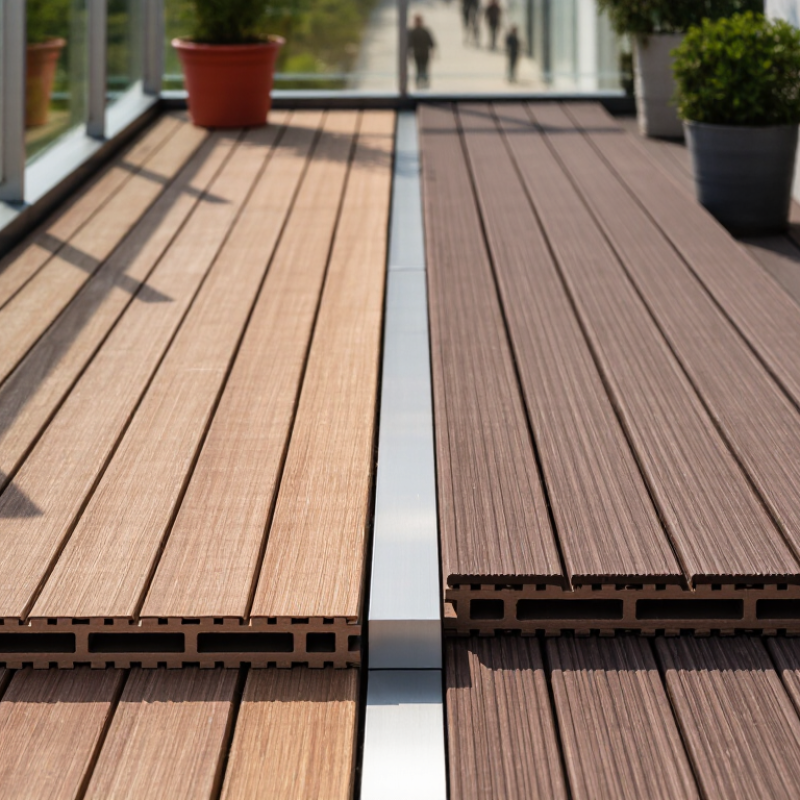
2026 Top Hollow vs Solid WPC Pros and Cons Which Is Best?

What Are Hollow and Solid WPC Decking Boards?

WPC decking combines wood fibres with plastic polymers, creating boards that resist common moisture and insect damage. Hollow boards contain internal chambers, often visible at the cut end. These spaces reduce weight and material use. They can make carrying and installation easier, especially on raised decks. However, hollow profiles may flex more when joist spacing is too wide. Their open ends also need suitable caps to limit water and debris entry.

Solid WPC boards have a dense, continuous core. They feel more substantial underfoot and usually handle impact better. This makes them useful for busy walkways, steps, or areas where furniture moves frequently. Their extra weight can complicate handling, and they may cost more. Neither type is automatically better. In real installations, poor joist spacing can damage both designs. That detail is easy to underestimate.

Tips: Check the board’s tested load rating and recommended joist spacing before buying. Compare cut-end protection, surface texture, expansion gaps, and local temperature changes. Hollow boards deserve careful support. Solid boards still require correct ventilation and drainage. I have seen attractive decks fail because installers focused on appearance, not water movement. The more honest choice depends on access, traffic, budget, and installation quality.

How Hollow and Solid WPC Boards Differ in Structure and Performance

2026 Top Hollow vs Solid WPC Pros and Cons Which Is Best?

How Hollow and Solid WPC Boards Differ in Structure and Performance

Hollow WPC boards contain internal chambers, while solid boards use a denser, continuous section. This difference changes weight, stiffness, heat response, and installation behavior.

A 2024 review in Polymers reports that hollow profiles can reduce material use and product weight by roughly 20–35%, depending on geometry. That matters when workers carry boards across balconies or upper floors.

However, thinner walls may flex more under concentrated loads. Solid boards usually feel firmer underfoot and provide better screw-holding strength, especially around stair edges and heavily used areas.

More stable, but not automatically superior.

Solid WPC also stores more heat because it contains more material. Hollow sections may cool faster, although dark surfaces can still become uncomfortable in direct summer sun.

ASTM D7031-11(2024) recommends evaluating flexural performance, water absorption, freeze-thaw behavior, and fastener resistance before specifying composite lumber.

Installation quality remains decisive. Blocked hollow ends, correct joist spacing, and proper drainage prevent problems that product comparisons often overlook.

A 2025 Mordor Intelligence market report estimates continued global WPC growth through 2030, but market expansion does not prove every profile performs equally.

My practical choice is hollow boards for lighter residential applications and easier handling.

I would choose solid boards where impact, frequent traffic, or stronger fastening matters.

The uncomfortable truth: neither option wins everywhere.

Key Advantages and Disadvantages of Hollow WPC Decking

Hollow WPC decking is gaining attention as the market expands. Grand View Research valued the global wood-plastic composites market at approximately USD 7.1 billion in 2023. Its 2024 assessment also projected about 7.3% annual growth through 2030. This growth reflects demand for lighter, low-maintenance outdoor materials, but market size does not prove every board performs equally.

The main advantage of hollow WPC is reduced weight. A long board is easier to carry across a garden or roof terrace. Internal cavities can also improve material efficiency and reduce transport loads. However, hollow boards may flex more between joists. They can feel slightly springy under a heavy chair. Water may enter poorly sealed ends, causing stains, freezing damage, or hidden deterioration. Solid WPC usually offers better impact resistance, stronger edge performance, and more reliable screw retention. It is also heavier and often costs more to move and install.

Tips: Check the manufacturer’s tested span tables, not only the board’s thickness. ASTM D7032 evaluates performance requirements for composite decking and railing. Keep end cuts sealed, maintain ventilation, and follow the specified joist spacing. A 2023 report from the Freedonia Group noted continuing competition among plastic, composite, and traditional decking materials. That competition can encourage better products, but it can also create confusing claims. I would test a sample outdoors first. A board that looks rigid in a showroom may behave differently in summer heat.

Key Advantages and Disadvantages of Solid WPC Decking

Solid WPC decking combines wood fiber and thermoplastic resin throughout the board. Its dense core gives better screw holding, impact resistance, and a firmer walking surface. In field installations, it feels less hollow underfoot, especially across longer joist spans. The Freedonia Group’s 2023 U.S. decking study identifies composite decking as a major growth segment, supported by demand for lower-maintenance outdoor flooring.

Solid boards also resist dents from patio furniture and heavy planters better than many hollow profiles. Their mass can improve sound control on balconies. However, strength has a cost. Solid WPC is heavier, so carrying boards upstairs requires more labor. It also uses more raw material per linear metre. Grand View Research valued the global wood-plastic composites market at about USD 7.0 billion in 2023, showing how material efficiency remains commercially important.

Heat deserves attention. Dense boards can become uncomfortably hot under direct summer sun. Color, ventilation, and local climate change the result. Solid WPC may also expand and contract noticeably, so installers must follow the manufacturer’s gap guidance and use compatible fasteners. ASTM D7032 evaluates performance requirements for composite decking, but certification does not remove poor installation risks. I have seen attractive decks develop uneven joints after inadequate spacing. That is a useful warning. Solid WPC suits busy terraces and high-traffic areas, yet hollow boards may be more practical where weight, drainage, and budget matter most.

Which WPC Type Is Best for Different Projects in 2026?

Choosing the best WPC type in 2026 depends more on the project than on appearance. Hollow WPC suits rooftop terraces, balconies, and raised walkways where low weight matters. Its internal cavities reduce material use and simplify carrying boards upstairs. However, installers must seal cut ends carefully. Moisture can enter through careless cuts.

Solid WPC works better for busy patios, public walkways, restaurant decks, and areas receiving heavy furniture. It feels denser underfoot and usually resists impact more effectively. That extra strength brings extra weight, higher material use, and greater handling effort. On a small balcony, solid boards may create unnecessary loading concerns. A qualified contractor should check the supporting structure before installation.

Climate also changes the decision. In hot regions, both types need expansion gaps and adequate airflow beneath the deck. Hollow boards can stay cooler in some designs, but their surface temperature still depends on color, sunlight, and ventilation. In freezing or wet conditions, solid boards may offer more confidence around vulnerable edges. Still, no WPC board is maintenance-free. Dirt collects between grooves, and poor drainage can shorten service life. I have seen attractive installations fail because the subframe was uneven. Measure twice. A careful layout often matters more than the board profile. For decorative privacy screens, hollow sections may be practical and economical. For steps, pool surrounds, or commercial entrances, solid WPC is usually the safer working choice. Not always. Project conditions deserve a second look.

2026 Top Hollow vs Solid WPC Pros and Cons Which Is Best? - Which WPC Type Is Best for Different Projects in 2026?

Comparison Dimension Hollow WPC Solid WPC Practical Project Implication
Internal Structure Longitudinal chambers or cavities inside the profile. Dense material through most or all of the board section. The structure affects weight, fastening behavior, impact resistance, and edge finishing.
Typical Weight Approximately 10–18 kg/m² for common decking profiles, depending on dimensions and wall thickness. Approximately 18–30 kg/m² for comparable decking profiles. Hollow boards are easier to transport and place; solid boards require stronger handling and substructure planning.
Material Efficiency Uses less material for the same external dimensions. Uses more material because the section is denser. Hollow WPC can reduce product weight and material consumption, while solid WPC prioritizes mass and robustness.
Handling and Installation Generally easier to carry, cut, and position. Heavier and more demanding to move and align. Hollow WPC is often practical for renovations, balconies, and projects with limited labor access.
Stiffness Under Load Adequate when installed at the manufacturer-specified joist spacing; more sensitive to profile design. Usually higher section mass and better resistance to localized deflection. Solid WPC is preferable where furniture loads, concentrated loads, or shorter joist spacing are expected.
Impact Resistance Good for normal residential use, but a sharp impact can damage a chambered profile more easily. Generally better resistance to dents and localized impact. Solid boards are usually the safer choice for busy walkways, hospitality areas, and public-use spaces.
Moisture Behavior The WPC material is moisture-resistant, but open ends and unsealed cavities may allow water or debris to enter. Fewer internal cavities, although cut ends and joints still require appropriate detailing. Neither type should be treated as completely waterproof; drainage and ventilation remain essential.
Thermal Movement Can respond more noticeably to temperature changes because of the lighter profile and air cavities. Also expands and contracts with temperature; greater mass does not eliminate movement. Use the specified end gaps, side gaps, ventilation, and fastening method for either type.
Edge Finishing Usually needs end caps, fascia, or a compatible trim to conceal the cavities. Can often be cut and visually finished more easily because the edges are dense. Solid WPC is often more convenient for visible stair nosings, picture frames, and exposed edges.
Cutting and Drilling Easy to cut, but fasteners should be positioned according to the profile and supported zones. More tolerant of edge cuts and fastening locations, subject to the product instructions. Solid WPC is generally easier for custom detailing and complex layouts.
Sound and Feel May sound more hollow under footsteps and may feel slightly less solid. Usually provides a denser, quieter, and more solid underfoot feel. Solid WPC is often preferred for premium residential terraces and indoor-outdoor transition areas.
Cost Position Often lower material and transport cost, but savings depend on the support system and trim requirements. Often higher material, transport, and handling cost. Compare the complete installed cost rather than board price alone.
Maintenance Normally needs routine sweeping and washing; exposed cavities require additional attention. Normally needs routine sweeping and washing, with fewer internal areas for debris. Both types are generally lower-maintenance than painted timber, but neither is maintenance-free.
Best-Fit Projects Residential balconies, rooftop terraces, garden decks, low- to medium-traffic patios, and projects where low weight matters. High-traffic decks, stairs, hospitality areas, public walkways, heavy outdoor furniture zones, and detailed edge applications. Select according to traffic, load, access, detailing, joist spacing, climate, and installation requirements.
Overall 2026 Recommendation Best when reduced weight, easier handling, and material efficiency are the main priorities. Best when impact resistance, a solid underfoot feel, and flexible edge detailing are the main priorities. There is no universal winner: hollow WPC suits lightweight residential applications, while solid WPC suits demanding or detail-intensive projects.

Data note: Weight ranges are indicative estimates for commonly used WPC decking profiles and can vary substantially with board width, thickness, chamber geometry, wood-fiber content, resin composition, surface cap, and moisture condition. Always verify structural capacity, joist spacing, fastener placement, fire classification, slip performance, and movement gaps against the specific product technical documentation and local building requirements.

FAQS

What is solid WPC decking made from?

Solid WPC decking contains wood fiber and thermoplastic resin throughout each board. Its dense core creates a firm walking surface.

Where does solid WPC decking work best?

It suits busy patios, public walkways, restaurant terraces, and areas with heavy furniture. It handles frequent traffic and impacts well.

Why might hollow WPC decking be better for balconies?

Hollow boards weigh less and use less material. They are easier to carry upstairs and may reduce structural loading concerns.

Does solid WPC decking resist dents?

Usually, yes. Its dense structure resists dents from patio furniture, large planters, and everyday impacts.

Can solid WPC decking become hot?

Yes. Dark colors and direct summer sunlight can create an uncomfortably hot surface. Airflow and local climate also matter.

Does solid WPC decking expand or contract?

It can expand and contract noticeably with temperature changes. Installers need correct gaps and compatible fasteners.

Is solid WPC decking maintenance-free?

No. Dirt can collect inside grooves, and poor drainage may shorten its service life. Maintenance is lower, not absent.

What installation mistakes should be avoided?

Uneven subframes and inadequate spacing can create irregular joints. I have seen attractive decks become uneven after careless installation.

Is solid WPC decking always the strongest choice?

Not always. It offers better firmness, but extra weight and material use may create practical disadvantages. Recheck the project conditions.

Conclusion

Hollow and solid WPC decking boards are both made from a blend of wood fibers and recycled polymer, but their internal structures create different performance characteristics. Hollow boards contain internal chambers that reduce weight, material use, and often cost, while solid boards have a denser, continuous core. When comparing strength, stability, appearance, installation, and maintenance, solid WPC generally offers greater impact resistance and a more substantial feel, whereas hollow WPC is easier to handle and may provide better value for suitable applications.

What are the pros and cons of hollow vs solid WPC? Hollow decking is lightweight, easier to transport, and practical for residential projects with proper support, but it may be more vulnerable to impact and requires careful protection of exposed ends. Solid decking provides stronger load-bearing performance, improved resistance to heavy use, and a premium, stable structure, although it is heavier and may cost more. In 2026, hollow WPC is suitable for budget-conscious, low-to-medium traffic areas, while solid WPC is often the better choice for high-traffic spaces, demanding environments, and projects prioritizing long-term durability.

Henry

Henry

Henry is a dedicated marketing professional with a profound expertise in the company's offerings. With years of experience in the industry, he possesses an impressive understanding of the market dynamics and consumer behaviors that drive success. Henry is committed to sharing his insights through......