How to Remove Oil Stains from WPC in 2026?

Time:2026-10-08 Author:Mason
0%

Oil stains on wood plastic composite can look minor at first. Then they spread into the textured surface. Cooking grease, barbecue drips, sunscreen, and motor oil each behave differently. WPC resists moisture, but it is not completely stain-proof.

This 2026 guide explains How to remove oil stains from wood plastic composite without damaging its surface. The process begins with patience, suitable cleaners, and a soft-bristle brush. Fresh oil usually needs absorbent material before water touches it. A dried stain may require several gentle cleaning rounds. Harsh solvents can fade the board or weaken its protective finish.

I have found that temperature, stain age, and board texture change the result. A smooth plank may release grease quickly. A deeply embossed plank can hold dark residue between its grooves. Test every cleaner on a hidden area first. That small step prevents a large repair problem. Never assume stronger chemicals work better. They often create a second issue.

Use clean water, mild dish detergent, and controlled scrubbing for most household spills. Avoid wire brushes and aggressive sanding. They can expose uneven fibers and leave visible marks. For automotive oil, follow the WPC manufacturer’s care guidance carefully. Product labels matter because composite formulas differ. No method is flawless. Some old stains may leave a faint shadow, even after careful treatment.

This guide focuses on practical, surface-safe decisions. It also explains when repeated cleaning is sensible and when replacement is more realistic. The goal is simple: remove the stain while preserving the board’s color, texture, and service life.
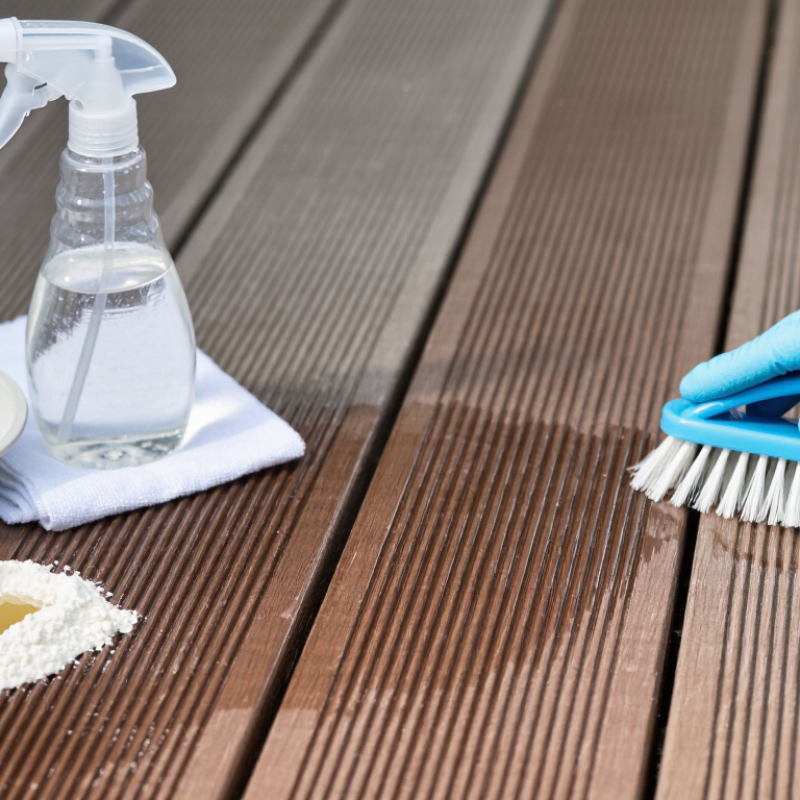
How to Remove Oil Stains from WPC in 2026?

Identify the WPC Surface and Assess the Oil Stain

How to Remove Oil Stains from WPC in 2026?

Identify the WPC Surface and Assess the Oil Stain

Start by identifying the surface before touching the stain. WPC decking may be capped, uncapped, brushed, or deeply embossed. A 2022 review in Construction and Building Materials reports that many WPC products contain roughly 30–70% wood fiber or flour. This range affects porosity, texture, and stain absorption. Capped boards usually resist penetration better, while exposed wood fibers can hold oil beneath the surface.

Look closely in daylight. Fresh oil often appears glossy and spreads beyond the original drop. Older stains may look dull, brown, or slightly darker around the edges. Press a clean white cloth onto the area. Do not rub yet. A visible transfer suggests surface residue remains. Water behavior also provides a useful clue. If water beads tightly, the stain may sit on a protective cap. If it darkens the texture, absorption is more likely.

Check the board’s grain direction and finish wear. The ASTM D7032 performance standard evaluates WPC decking for durability, but it does not guarantee identical cleaning behavior. That distinction matters. Some surfaces tolerate gentle detergent well; others develop pale patches after aggressive scrubbing. Test any cleaning method on a hidden section for 24 hours. I would not skip this step, even when the stain looks minor. My earlier assumption that every dark mark was oil proved unreliable; dirt, mildew, and surface abrasion can look surprisingly similar.

Gather Safe Cleaning Tools and Suitable Materials

How to Remove Oil Stains from WPC in 2026?

Gather Safe Cleaning Tools and Suitable Materials

Oil stains on WPC need controlled cleaning, not aggressive chemicals. Prepare nitrile gloves, a microfiber cloth, a soft nylon brush, and a plastic scraper. Use warm water and a pH-neutral detergent. Avoid metal brushes, abrasive powders, chlorine bleach, and strong solvents. They may roughen the surface or fade its color.

A 2024 wood-plastic composite market report estimated global demand would grow at over 10% annually through 2030. More outdoor WPC surfaces mean more maintenance decisions. The U.S. Environmental Protection Agency’s Safer Choice Standard also emphasizes safer ingredients and clear product disclosure. Choose a cleaner with readable instructions and no oily residue. Check a hidden area first.

Remove fresh oil with an absorbent white cloth. Do not spread it. Add a small amount of diluted detergent to warm water, then scrub gently along the board grooves. Rinse with clean water and dry the surface completely. A soft brush works better than heavy pressure. I once used too much detergent, and the film attracted dust later. Less is usually safer. Allow several minutes for the cleaner to loosen the stain, but do not let the solution dry.

How to Remove Oil Stains from WPC in 2026?

Gather Safe Cleaning Tools and Suitable Materials

For routine oil-stain removal on WPC, start with warm water, a soft microfiber cloth, and a mild pH-neutral detergent. Avoid abrasive pads, strong acids, and concentrated chlorine products because they may dull, discolor, or damage the surface. The pH values shown are typical ranges reported for common household cleaning materials; always follow the WPC manufacturer’s care instructions and test an inconspicuous area first.

Remove Fresh Oil Before It Spreads Into the WPC

How to Remove Oil Stains from WPC in 2026?

Remove Fresh Oil Before It Spreads Into the WPC

Fresh oil needs quick attention. Do not wait for it to dry. Oil can travel across WPC’s textured surface and settle inside shallow grooves. Use a clean, absorbent cloth to lift the spill. Press gently. Avoid rubbing, because friction may push oil deeper. Replace the cloth when it looks saturated. Small spills are easier to control.

Mix warm water with a small amount of mild dish soap. Apply the solution with a soft nylon brush or microfiber pad. Follow the grain-like texture of the board. Work from the outside toward the center. Rinse with clean water, then dry the area completely. Standing water can make the surface look clean while residue remains.

I have found that repeated light cleaning works better than one aggressive scrub. Harsh solvents, abrasive powders, and metal brushes may dull the finish or leave visible scratches. Test the cleaning solution on a hidden section first. This step feels unnecessary, but it can prevent a larger repair. If a shadow remains after drying, repeat the gentle wash once. Do not use high pressure close to the board, since it may force oil into joints and textured areas. Surface temperature also matters; hot WPC can dry soap too quickly.

How to Remove Oil Stains from WPC in 2026? - Remove Fresh Oil Before It Spreads Into the WPC

Practical cleaning sequence for wood-plastic composite decking and outdoor surfaces

Cleaning Stage Recommended Action Materials and Mixture Suggested Contact Time Tools Expected Result Important Precaution
1. Identify the Spill Check whether the mark is fresh cooking oil, grease, lubricant, or another oily substance. Remove nearby objects so the spill cannot spread. Clean white paper towel or absorbent cloth Immediately Paper towel, disposable cloth, gloves Limits the affected area and prevents additional rubbing. Do not wipe forcefully across the boards because this can spread oil into the surface texture and joints.
2. Absorb Fresh Oil Place absorbent material over the stain and lift it vertically. Repeat with clean material until little or no oil transfers. Dry absorbent paper or cloth; a small amount of inert absorbent powder may be used for larger spills 2–5 minutes Paper towels, soft cloth, plastic scraper for thick residue Removes most surface oil before it migrates into the WPC texture. Avoid metal scrapers, abrasive pads, and colored cloths that may scratch or transfer dye.
3. Lift Thick Residue Gently lift congealed grease from the surface without pushing it along the grain or into the grooves. No liquid required at this stage 1–3 minutes Plastic scraper or old plastic card Reduces the amount of oil that must be dissolved during washing. Keep the scraper nearly flat and follow the board direction.
4. Prepare Cleaning Solution Mix a mild household dishwashing detergent with warm water. Use enough detergent to cut grease without creating excessive residue. Approximately 15–30 mL mild detergent per 4 L warm water Prepare before application Bucket, measuring cup, soft-bristle brush Creates a diluted degreasing solution suitable for routine WPC cleaning. Do not combine detergent with bleach, ammonia, acids, or other cleaning chemicals.
5. Wash the Stain Apply the solution to the affected area and scrub lightly in the direction of the boards, working from the outside toward the center. Prepared mild detergent solution 3–5 minutes Soft nylon brush or non-abrasive sponge Breaks down remaining oil and lifts residue from surface embossing. Do not use a stiff wire brush or aggressive circular scrubbing.
6. Clean the Grooves Brush the grooves and board joints with short, controlled strokes. Remove loosened residue instead of pushing it deeper. Same mild detergent solution 1–3 minutes Soft nylon detailing brush Reduces dark residue that can remain in textured or grooved WPC surfaces. Avoid forcing debris into drainage gaps or beneath the boards.
7. Rinse Thoroughly Rinse with clean water until no slippery detergent film remains. Direct runoff away from walls and furniture. Clean tap water 1–2 minutes Garden hose with a gentle spray or clean damp cloth Removes dissolved oil, detergent, and loosened particles. If using a pressure washer, keep the pressure low, use a wide fan spray, and maintain distance from the surface.
8. Dry and Inspect Blot excess water and allow the area to dry naturally. Inspect the stain only after the surface is dry. Clean microfiber cloth if needed 30–60 minutes Microfiber cloth, good ventilation Shows whether a second mild cleaning is necessary without confusing water marks with oil residue. Do not judge the final appearance while the WPC is still wet.
9. Repeat if Necessary Repeat the mild detergent wash once or twice if a shadow remains. Use a small test area before trying any stronger cleaner. Fresh mild detergent solution; stronger cleaners only when approved by the WPC manufacturer After the surface dries Soft brush, clean water Improves removal of older or partially absorbed oil without immediately resorting to harsh chemicals. Stop if color change, whitening, gloss loss, or surface damage appears.
10. Prevent Recurrence Clean cooking or maintenance spills as soon as possible and use a tray or protective mat beneath oil-producing equipment. Protective tray, absorbent pads, routine cleaning supplies Ongoing Tray, mat, soft broom Reduces repeated staining and limits long-term discoloration. Do not leave rubber-backed or non-breathable mats in place for prolonged periods unless they are approved for the surface.

Safety and surface-care note: Always test any cleaning solution on a hidden area first. Follow the WPC product maintenance instructions, wear suitable gloves, and keep children and pets away from wet cleaning solutions.

Key principle: Fresh oil is easier to remove because it remains near the surface. Absorb first, wash gently, rinse completely, and avoid abrasive tools or undiluted solvents.

Clean Set-In Oil Stains With a Controlled Washing Method

How to Remove Oil Stains from WPC in 2026?

Set-in oil needs controlled washing, not aggressive scrubbing. WPC combines wood fibers with plastic, so its textured surface can hold cooking oil, grease, and dust. A 2024 Grand View Research report valued the global WPC market at approximately US$7 billion in 2023. That scale reflects widespread outdoor use, but not unlimited stain resistance. ASTM D7031 guidance also highlights moisture, surface wear, and maintenance as important performance factors.

Start by removing loose dirt with a dry, soft brush. Apply a diluted, pH-neutral degreaser to a small hidden area. Wait five minutes. Work along the board grain with a soft nylon brush, then rinse with clean water. Keep the spray moving and use low pressure. A narrow, powerful jet may roughen the surface or create a visible patch. For older stains, repeat the process after drying. One pass may not work. I once scrubbed too hard on a textured board, and the mark became less oily but more noticeable.

Tips: Blot fresh oil quickly with an absorbent cloth. Avoid steel brushes, abrasive powders, paint thinner, and boiling water. Test every cleaner first, because WPC formulas and surface finishes differ. Allow the deck to dry fully before judging the result. Inspect it in daylight.

Rinse, Dry, and Inspect the WPC for Remaining Residue

How to Remove Oil Stains from WPC in 2026?

Rinse, Dry, and Inspect the WPC for Remaining Residue

After lifting an oil stain, rinse the WPC thoroughly with clean, lukewarm water. Residue often hides inside the board’s embossed grain. A narrow spray pattern can push grease deeper, so use moderate pressure and keep the nozzle moving. Field cleaning guidance commonly recommends avoiding aggressive pressure that may roughen the surface. ASTM D7031-11(2018) also emphasizes controlled appearance evaluation for wood-plastic composite products.

Use a clean microfiber cloth to dry the area, following the board’s grain. Do not leave standing water around joints or fasteners. Moisture can make a faint oily film difficult to see. Wait until the surface is fully dry. Then inspect it from several angles, preferably in daylight. Look for dark halos, rainbow-like patches, or a slippery touch. A second rinse may be necessary.

Check the cloth, too.

If the cloth still shows a greasy mark, repeat the rinse and drying cycle. The American Society for Testing and Materials identifies visual surface changes as an important part of WPC performance evaluation. That makes inspection more than a cosmetic step. It is a practical quality check. I have sometimes judged a stain removed too early, especially on darker boards. That mistake is easy to make. Avoid abrasive pads and untested solvents, because a clean-looking patch may later appear dull or uneven. Testing any cleaner on a hidden area remains sensible.

FAQS

How can I identify the type of WPC surface before cleaning?

Check whether the board is capped, uncapped, brushed, or deeply embossed. Exposed fibers may absorb oil more easily. Look in daylight.

How can I tell whether the mark is really oil?

Fresh oil often looks glossy and spreads outward. Older oil may appear dull, brown, or darker at the edges. Dirt and abrasion can look similar.

What simple test should I perform first?

Press a clean white cloth onto the mark without rubbing. Visible transfer suggests residue remains on the surface. Water behavior also offers a clue.

How does water help assess the stain?

Tight water beads may indicate a protective surface layer. If water darkens the texture, absorption may be deeper. This test is not perfect.

What should I do with a fresh oil stain?

Blot it quickly with an absorbent cloth. Do not rub. Rubbing can spread oil across the board texture.

How should I clean a set-in oil stain?

Remove loose dirt with a dry, soft brush. Apply diluted, pH-neutral degreaser to a hidden area. Wait five minutes.

What brushing and rinsing method is safest?

Use a soft nylon brush and follow the board grain. Rinse with clean water. Keep water pressure low and the spray moving.

What mistakes should I avoid when cleaning WPC?

Avoid steel brushes, abrasive powders, paint thinner, and boiling water. Strong pressure may roughen the surface. Aggressive scrubbing can create a larger-looking patch.

Should I repeat the cleaning process?

Let the board dry fully before judging the result. Older stains may need another gentle treatment. One pass may fail.

Why should I test the cleaner first?

WPC formulas and finishes differ. Test a hidden section and wait 24 hours. I once assumed every dark mark was oil, but that judgment was wrong.

Conclusion

How to remove oil stains from wood plastic composite depends on the surface condition and how long the oil has been present. Begin by identifying the WPC finish and assessing whether the stain is fresh, spread out, or deeply set. Prepare safe cleaning tools, such as absorbent cloths, a soft brush, clean water, and a mild, surface-appropriate detergent. Avoid harsh chemicals or abrasive materials that could damage the composite texture.

For fresh oil, gently blot the area to absorb as much oil as possible before it spreads. For set-in stains, apply a small amount of diluted cleaner and work carefully with a soft brush in the direction of the surface pattern. Do not flood the WPC or scrub aggressively. Rinse the area thoroughly with clean water, remove excess moisture, and allow it to dry completely. Finally, inspect the surface under good lighting and repeat the controlled cleaning process if any residue remains.

Mason

Mason

Mason is a seasoned marketing professional with a deep expertise in the company's offerings and a passion for driving brand awareness. With a strong background in digital marketing strategies, he has an innate ability to connect with diverse audiences and effectively communicate product benefits.......