Choosing the right joist spacing for WPC (Wood Plastic Composite) installation can greatly impact your project's success. Many people overlook this detail, yet it is crucial for the stability and durability of the deck. The right spacing ensures that the WPC boards have adequate support and can withstand varying weather conditions.
When considering how to choose the right joist spacing for WPC installation, it's important to account for factors such as the weight the deck will bear and the type of WPC material used. Not all WPC products are created equal; some may require closer spacing due to higher flexibility. Additionally, improper spacing can lead to issues such as warping or cracking over time.
Reflecting on past experiences can guide better decisions. Many contractors learn through trial and error, realizing too late that they should have adjusted spacing. This highlights the importance of being diligent during the planning phase. Ultimately, understanding the science behind joist spacing will create a deck that is not only visually appealing but also structurally sound for years to come.
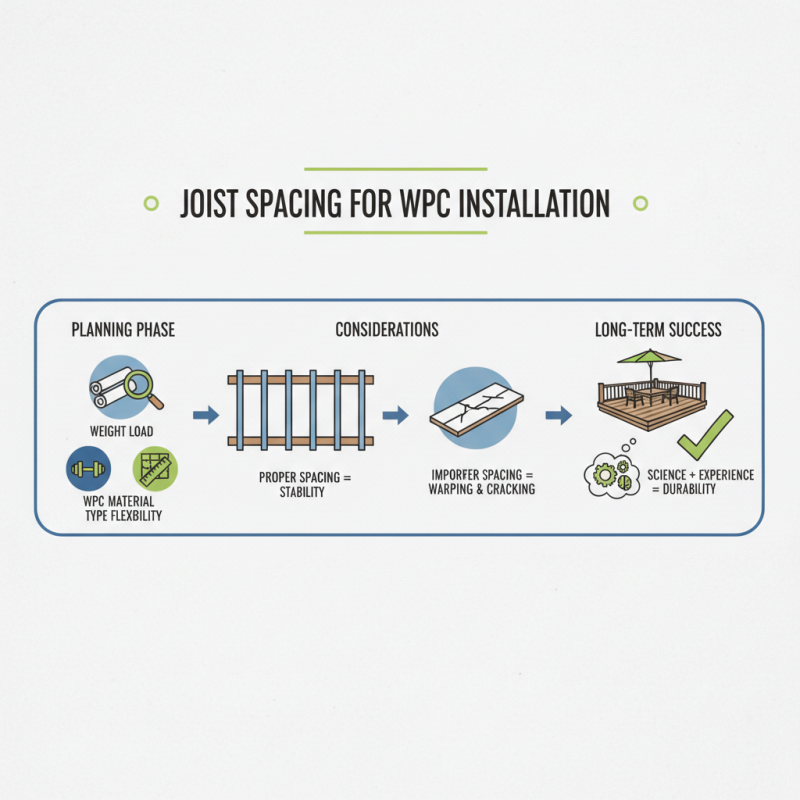
Proper joist spacing is crucial for WPC (Wood Plastic Composite) installations. It directly impacts the durability and overall performance of the structure. When joists are spaced too far apart, the deck may flex or sag. This can lead to warping or even cracking in the WPC material over time. Therefore, careful attention to spacing can save you from costly repairs in the long run.
Correct spacing also enhances the visual appeal of the installation. Uneven joist placements can create noticeable gaps or uneven surfaces. A well-planned spacing ensures a uniform look, enhancing the aesthetic quality of your outdoor space. Additionally, optimal joist spacing allows for better drainage. This is especially important in areas with heavy rainfall, as water must be effectively channeled away to prevent pooling.
However, it's worth noting that each installation scenario may require adjustments based on the specific environment and usage. Overestimating joist spacing can lead to problems, while underestimating it may cause unnecessary material costs. Trial, error, and experience are often part of the process. Consistent evaluation of the installation is essential for achieving the best results.
When installing wood-plastic composite (WPC) decking, understanding joist spacing is crucial. The recommended spacing varies based on the WPC material type. This ensures proper support and longevity.
For standard WPC boards, a joist spacing of 16 inches on center is typically recommended. This spacing allows for adequate structural integrity. For lighter, thinner composites, consider reducing the spacing to 12 inches on center. This can help prevent sagging or bending over time. The choice of material significantly affects the required spacing.
It's essential to follow these guidelines closely. Many DIYers overlook the impact of improper spacing, leading to issues like warping or uneven surfaces. Consult manufacturer specifications for exact recommendations. Every project gives a chance to learn—measure twice and cut once. Best practices evolve, and familiarity with your specific materials can lead to insights for future installations.
| WPC Material Type | Recommended Joist Spacing (Inches) | Load Bearing Capacity (lbs/sq ft) | Ideal Joist Material |
|---|---|---|---|
| Composite Decking | 16 | 50 | Pressure-Treated Wood |
| PVC Decking | 12 | 60 | Aluminum |
| Wood-Plastic Composite | 16 | 70 | Engineered Wood |
| Bamboo Composites | 24 | 40 | Steel |
| Modified Wood | 16 | 55 | Composite Beam |
When installing wood-plastic composite (WPC) decking, joist spacing is critical. Load-bearing capacity significantly influences this decision. A proper understanding of this will ensure your deck is durable and safe.
Joists act as the primary support system for your deck. They must handle the weight of both the deck and any added loads. The spacing between joists typically ranges from 12 to 24 inches, depending on the material and expected loads. Wider spacing might save materials, yet it could risk the integrity of the structure. Calculate expected loads carefully to make an informed decision.
Tip: Always adjust joist spacing based on the specific WPC you're using. Different composites have different properties.
Consider environmental factors. If you live in a windy or snowy area, closer joist spacing is advisable. Fluctuations in load can affect the performance of your deck. It’s important to evaluate how often the deck will bear heavy weight.
Tip: Regularly inspect the deck for signs of sagging. This could indicate problematic joist spacing.
Choosing the right joist spacing requires attention to detail. Don't overlook these vital factors. Reflect on how each decision impacts your decking project. You may find that slightly tighter spacing leads to better performance. Always prioritize safety and structural integrity.
When installing WPC (Wood Plastic Composite) decking, joist spacing is crucial. Mistakes in this area often lead to structural issues. Common errors include spacing that is too wide or too narrow. Both can compromise the durability and performance of your deck.
Joist spacing typically ranges from 12 to 16 inches. However, some overlook the weight and design of their decking materials. This oversight can result in sagging and short lifespan. Always check the manufacturer guidelines before you start.
Tips: Use a level to ensure consistent height. Regularly verify measurements to avoid costly adjustments later. Knowing your material's weight can guide proper spacing. A well-planned layout prevents common pitfalls. Don't rush. Take your time to measure carefully. Confirm your work before proceeding.
When installing Wood Plastic Composite (WPC) decking, joist spacing is crucial. Proper spacing ensures durability and support for your deck. Industry standards typically recommend joist spacing of 16 inches on center for WPC. However, deviations may be necessary based on specific project conditions. For example, heavier loads or varying environmental factors could require closer spacing, such as 12 inches on center.
It’s essential to consult local building codes and industry guidelines. This information can vary based on your location and the type of installation. Always check regulations to avoid potential issues down the line. Keep in mind that improper spacing can lead to deck sagging or structural failure.
Tips: Always test your plans with a weight load assessment. Verify the planned joist spacing against these tests. It’s a good practice to observe existing structures for real-world performance. Not all installations are the same; your project might require adjustments that differ from standard guidelines. Implementing these checks can significantly enhance the longevity and safety of your WPC decking.
: Proper joist spacing affects durability and performance. Too far apart can cause flexing or sagging.
Spacing too far can cause warping or cracking in WPC. This leads to costly repairs over time.
Proper joist spacing ensures a uniform look. It prevents noticeable gaps and creates an even surface.
Standard boards typically require 16 inches on center for adequate support and integrity.
For lighter boards, reduce spacing to 12 inches on center. This helps prevent sagging over time.
Consult local building codes and manufacturer specifications. These guide you to avoid potential problems.
No, each project may need adjustments. Evaluate your specific environment and usage for the best results.
Conduct a weight load assessment. Verify your spacing against this test for safety and stability.
Many overlook the effects of improper spacing. This can lead to issues like warping or uneven surfaces.
Regular checks help ensure longevity and safety. You may need to adjust plans to fit specific project needs.
Proper joist spacing is crucial for the successful installation of wood-plastic composite (WPC) materials. Understanding the benefits of optimal joist spacing helps ensure structural integrity and longevity of the WPC deck. It is essential to consider the specific types of WPC materials, as different compositions may require varying spacing. Additionally, load-bearing capacity is a critical factor in determining how to choose the right joist spacing for WPC installation, as it affects the overall performance under weight stress.
Common mistakes in joist spacing can lead to significant issues such as sagging or even structural failure. Following industry standards and guidelines is vital to avoid these pitfalls and achieve a safe, durable installation. By paying close attention to these aspects, homeowners and builders can enhance the functionality and aesthetics of WPC projects, ensuring they stand the test of time.

KandS Floor