In 2026, WPC flooring is attracting attention in homes, hotels, and busy commercial spaces. Its price often exceeds standard timber flooring. Why is WPC flooring more expensive than traditional timber? The answer begins with its layered construction, moisture-resistant core, protective surface, and factory-controlled production.
Grand View Research reports that the global wood plastic composites market reached approximately USD 7.1 billion in 2023. It also projects continued growth through the decade, supported by demand for durable building materials. However, this figure covers several applications, not flooring alone. The comparison is imperfect. Market data is not a retail price list.
WPC flooring commonly combines wood fibers, polymer resins, stabilizers, and decorative films. These materials require formulation, extrusion, cooling, and quality testing. That process costs more than producing basic solid timber planks. WPC can also reduce expansion, surface staining, and moisture-related movement. The Wood Handbook from the USDA Forest Products Laboratory explains that wood changes dimension as moisture conditions change. That technical limitation becomes visible near kitchens, bathrooms, and entrance doors.
Installation can alter the calculation. Many WPC products use click-lock systems and need fewer site adjustments. Less sanding or sealing may reduce labor costs. Still, premium WPC is not automatically the better purchase. A low-quality product can suffer from weak locking edges, fading, or poor dimensional stability. Buyers should examine wear-layer thickness, core density, warranty terms, and independent test results. The real value depends on the room, installer, traffic level, and expected service life. Sometimes timber remains the sensible choice. That deserves honest reflection.
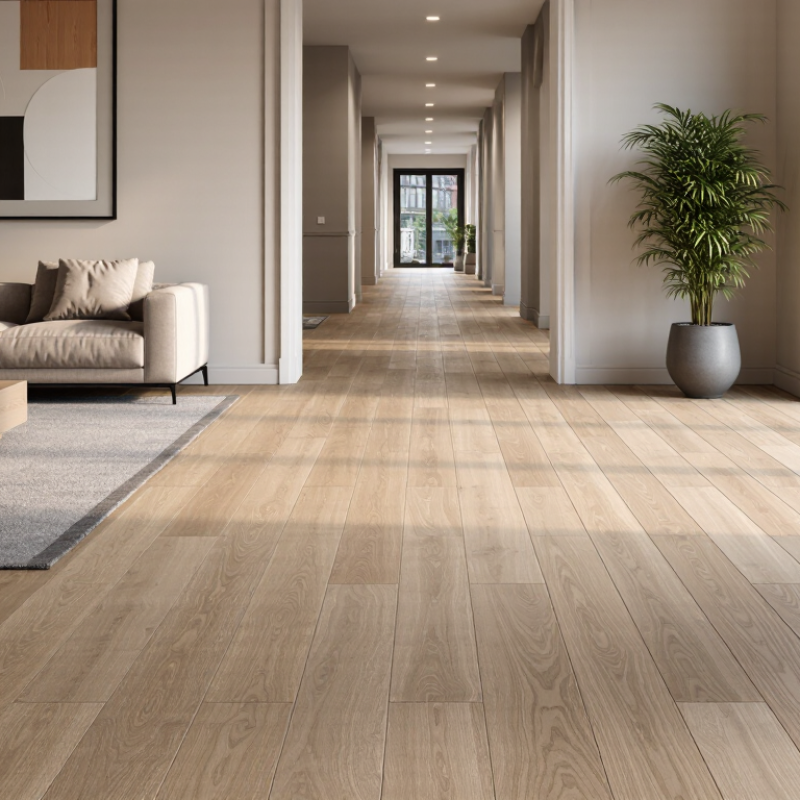
WPC flooring means wood plastic composite flooring. It combines wood flour or fibers with thermoplastic resin, stabilizers, pigments, and processing aids. The mixture is heated, blended, and formed into a dense core through extrusion. This manufacturing process creates consistent boards with fewer natural knots and gaps than solid timber.
A typical plank has several layers. The wear layer protects the printed surface from scratches and daily traffic. The decorative film provides a wood-like appearance, while the WPC core adds dimensional stability and moisture resistance. Some products include a backing layer for comfort and sound reduction. Quality depends on resin content, fiber distribution, core density, and manufacturing control. More expensive products may require costly molds, precise temperature management, and stronger surface coatings. Still, “waterproof” claims need careful reading. Seams and subfloors can still allow moisture problems. I have seen attractive flooring fail when installation ignored these details.
Tips: Check the technical sheet, not only the sample. Confirm wear-layer thickness, locking-system tolerance, indoor air certifications, and approved subfloor conditions. Leave expansion gaps around walls and heavy fixtures. Clean spills promptly. WPC is practical, but it is not indestructible. Its wood content can also make recycling more complicated, an issue many buyers overlook.
| Comparison Dimension | WPC Flooring | Timber Flooring | Cost and Performance Implication |
|---|---|---|---|
| Basic Definition | Wood Plastic Composite flooring is a multi-layer flooring product with a wood-polymer composite core, a decorative surface, a protective wear layer, and usually an attached underlay. | Timber flooring is made primarily from natural wood. It may be solid hardwood or engineered wood with a real-wood wear layer bonded to a wood-based core. | WPC is an engineered product with more production stages, while timber relies on the processing and finishing of natural wood. |
| Typical Material Composition | Approximately 30–60% wood flour or wood fiber, 30–60% thermoplastic polymer, plus stabilizers, pigments, foaming agents, and processing additives. Exact ratios vary by product. | Solid timber is generally over 90% natural wood. Engineered timber combines a real-wood top layer with plywood, hardwood, or other wood-based support layers. | WPC uses additional polymer and performance additives, increasing formulation, quality-control, and processing costs. |
| How WPC Is Made | Wood particles are dried, blended with polymer and additives, heated, and extruded or molded into a stable core. The core is then laminated with a printed décor layer and wear layer before profiling and inspection. | Logs are sawn, kiln-dried, graded, machined, and finished. Engineered boards also require veneer preparation, layer bonding, pressing, profiling, and surface finishing. | WPC requires controlled mixing, temperature management, extrusion or molding, lamination, and dimensional testing. These steps can raise factory costs. |
| Surface Appearance | Uses a printed wood image and embossed texture. Higher-quality products can reproduce realistic grain patterns, knots, and matte finishes. | Shows genuine wood grain, natural color variation, knots, and species-specific characteristics. Each board is visually unique. | WPC provides consistent appearance and design repeatability; timber offers authentic natural variation and can be refinished in many cases. |
| Water Resistance | Generally high Polymer content gives the core better resistance to surface moisture and routine spills than many wood-based floors. Seams, edges, and subfloor conditions still require protection. |
Limited to moderate Unsealed or poorly maintained timber can absorb moisture, swell, stain, or cup. Engineered timber is often more dimensionally stable than solid wood but is not waterproof. |
WPC may reduce replacement risk in kitchens, entryways, and other areas exposed to occasional moisture, although it should not be treated as suitable for standing water. |
| Dimensional Stability | Usually expands and contracts less than solid timber when exposed to normal indoor humidity changes. Required expansion gaps remain important. | Natural wood responds to humidity and temperature. Solid timber generally moves more across the grain than engineered timber. | WPC can reduce seasonal movement and installation callbacks, but the subfloor, room size, sunlight, and installation method still affect performance. |
| Comfort Underfoot | Typically warmer and softer underfoot than rigid mineral-core flooring, especially when installed with an attached acoustic or foam underlay. | Natural timber provides a warm, resilient feel and can be installed over suitable underlay or a structural wood subfloor. | WPC may include an integrated underlay, but this feature can increase the purchase price compared with basic timber boards. |
| Sound Performance | Often provides improved impact and footfall comfort when paired with an appropriate acoustic underlay. Performance depends on the full floor assembly. | Can sound hollow or transmit impact noise when installed without suitable acoustic treatment, particularly in multi-story buildings. | WPC may cost more upfront because some products include acoustic backing or require specialized underlay systems. |
| Installation Method | Commonly uses a floating click-lock system over a clean, dry, and level subfloor. Some products require adhesive or specific underlay conditions. | May be nailed, stapled, glued, or floated, depending on whether the floor is solid or engineered timber and on the subfloor type. | Click installation can reduce labor time, but subfloor leveling, moisture testing, trims, and transition profiles can add to the total installed cost. |
| Typical Material Cost in 2026 | Approximately USD $3–$8 per square foot for mainstream residential WPC flooring; premium textures, thicker wear layers, and integrated underlay can cost more. | Approximately USD $2–$6 per square foot for entry-level timber, USD $4–$12 for common engineered timber, and more for premium solid or specialty wood. | WPC is not always more expensive than timber. It usually costs more than basic timber or low-cost wood products, but premium timber can exceed WPC pricing. |
| Typical Installed Cost in 2026 | Approximately USD $6–$14 per square foot, including typical installation labor and basic accessories. Subfloor repair, removal, and premium trims are usually extra. | Approximately USD $5–$15 per square foot for common timber installations. Sanding, staining, nail-down work, complex layouts, and refinishing can increase the total. | The final price depends more on installation method, site preparation, product grade, and local labor rates than on the flooring material alone. |
| Why WPC Can Cost More Than Basic Timber | Higher cost may result from polymer resin, additives, precision extrusion, decorative printing, embossing, a protective wear layer, attached underlay, moisture testing, and stricter dimensional tolerances. | Basic timber can have a simpler material structure and fewer composite manufacturing stages, particularly when it is unfinished or made from lower-cost wood species. | The price premium is mainly a payment for controlled performance, design consistency, moisture resistance, and installation convenience—not simply for the wood content. |
| Scratch and Wear Resistance | Depends mainly on the thickness and quality of the transparent wear layer. Commercial-grade products generally provide stronger routine wear protection than unfinished or soft timber. | Varies by wood species, finish, hardness, and maintenance. Timber can scratch and dent but may be sanded and refinished if enough wear layer remains. | WPC can have lower maintenance costs, while timber may offer greater long-term repairability rather than replaceability. |
| Maintenance | Regular sweeping or vacuuming and damp mopping with a suitable neutral cleaner are normally sufficient. Excess water and abrasive tools should be avoided. | Requires dust removal, careful moisture control, protective pads, and periodic recoating or refinishing depending on traffic and finish type. | WPC often has lower routine maintenance requirements, which can offset part of its higher purchase price over time. |
| Repairability | Individual click-lock planks can often be replaced, but color matching may become difficult if the product is discontinued or exposed to sunlight for a long period. | Solid timber can usually be sanded and refinished multiple times. Engineered timber can be refinished only when its real-wood top layer is thick enough. | Timber generally offers better restoration potential; WPC offers easier localized plank replacement rather than full-surface refinishing. |
| Expected Service Life | Common residential products are often designed for approximately 15–30 years of service when correctly installed and maintained. Actual life depends on wear-layer thickness, traffic, moisture, and care. | Solid timber can last for several decades and may exceed 50 years with proper maintenance. Engineered timber commonly lasts approximately 20–50 years, depending on construction and refinishing potential. | WPC can deliver strong lifecycle value in moisture-sensitive areas, while well-maintained timber may provide the longest restoration-based service life. |
| Environmental Considerations | May use wood by-products and recycled polymer in some formulations, but it combines wood and plastic, which can make end-of-life separation and recycling more difficult. | Can be a renewable material when sourced from responsibly managed forests. Adhesives, finishes, kiln drying, and transportation also affect the overall environmental impact. | Environmental performance depends on recycled content, certified sourcing, product lifespan, manufacturing energy, and disposal routes—not on material type alone. |
| Best Use Cases | Busy homes, rental properties, family rooms, kitchens, entry areas, and projects requiring consistent appearance, simple installation, and improved moisture tolerance. | Living rooms, bedrooms, heritage interiors, premium residential projects, and spaces where authentic material, repairability, and long-term refinishing are priorities. | The best option depends on moisture exposure, expected traffic, subfloor condition, design goals, budget, and the value placed on future refinishing. |
| Key Buying Checks for 2026 | Check total thickness, wear-layer thickness, core density, dimensional tolerances, click-lock quality, underlay requirements, expansion rules, indoor-air certifications, and warranty exclusions. | Check wood species, board construction, moisture content, finish quality, wear-layer thickness for engineered products, installation method, acclimation instructions, and refinishing limits. | Compare the complete installed system rather than the plank price alone. Subfloor preparation, trims, transitions, delivery, waste, and future maintenance can materially change the total cost. |
Note: Cost ranges are broad 2026 planning estimates in U.S. dollars per square foot for residential projects. Regional labor rates, product specifications, subfloor preparation, taxes, delivery, waste, removal, and accessories can significantly change actual prices. WPC flooring is not automatically more expensive than all timber flooring; it is commonly more expensive than entry-level timber but may cost less than premium solid or engineered timber.
WPC flooring combines wood fibers, thermoplastic resin, stabilizers, pigments, and processing aids. The mixture is heated and extruded into a dense core. It forms consistent planks.
A typical plank includes a wear layer, decorative film, WPC core, and sometimes backing. The wear layer resists scratches and traffic. The backing may reduce sound.
No. WPC resists many spills, but seams and edges can still admit moisture. Standing water may reach the subfloor. Details matter.
WPC usually stays flatter during humidity changes. Timber offers warmer feel, natural grain, and deeper repair options. WPC generally provides easier cleaning and more predictable sizing. Neither material suits every room.
WPC uses several engineered layers, precision molds, and controlled manufacturing temperatures. Timber may cost less initially, but installation can include acclimation, sanding, sealing, and maintenance. The final quotation matters more than the shelf price.
Kitchens, entrances, and lower-level rooms may benefit from WPC’s moisture resistance and stable structure. Wet shoes and pet activity are usually easier to manage. Still, drainage and joints need attention.
Check the technical sheet, core density, wear-layer thickness, locking tolerance, and indoor-air certifications. Confirm approved subfloor conditions and warranty details. Ask whether matching replacement boards remain available.
Test concrete subfloors for moisture before installation. Leave expansion gaps around walls, cabinets, and heavy fixtures. Use suitable underlay and plan doorway transitions carefully. Clean spills promptly. I once underestimated transitions, and the finished floor looked uneven.
WPC flooring, or wood plastic composite flooring, is made by combining wood fibers, polymer materials, and stabilizing additives into a dense, layered structure. This manufacturing process gives it a realistic wood appearance while improving resistance to moisture, stains, scratches, and everyday wear. Compared with traditional timber flooring, WPC is generally more stable in humid environments and less likely to expand, contract, warp, or require frequent refinishing.
Why is WPC flooring more expensive than traditional timber? Its higher price reflects advanced production, multi-layer construction, protective surface treatments, and improved water resistance. Although timber may have a lower initial cost, it can require ongoing sealing, polishing, repairs, and replacement in demanding areas. WPC may therefore offer lower long-term maintenance costs and more predictable performance. In 2026, buyers should compare not only purchase and installation prices, but also durability, moisture exposure, maintenance needs, expected lifespan, comfort, appearance, and overall value for their specific space.

 KandS Floor