Why Is My WPC Flooring Expanding and Warping?

Time:2026-09-08 Author:Liam
0%

Why is my WPC flooring expanding and warping? The answer usually begins beneath the planks. Moisture, heat, restricted movement, and uneven subfloors can combine like pressure inside a sealed container. A small installation error may become visible as peaked joints, lifted edges, or soft, uneven sections.

The Resilient Floor Covering Institute identifies temperature and moisture control as essential parts of resilient-flooring performance (RFCI Resilient Flooring Installation Guidelines). ASTM F710 also emphasizes concrete moisture testing before resilient flooring installation. These standards matter because WPC cores are dimensionally stable, not dimensionally frozen. Rooms with strong sunlight can heat dramatically near glass doors. Wet concrete can release vapor for months. A tight perimeter may leave no space for natural movement.

Installation educator Scott Carothers explains the practical principle this way: “Every floor needs room to move.” His warning is simple, but homeowners often overlook it. Manufacturer instructions still control the final decision. Product construction differs.

Industry research supports this concern. The 2024 Global Flooring Market Report from Grand View Research describes resilient flooring as a major and expanding category, increasing the number of installations exposed to varied climates and subfloor conditions. More products do not mean identical installation requirements. That assumption causes trouble.

This article examines why is my WPC flooring expanding and warping through moisture checks, acclimation, expansion gaps, sunlight exposure, and subfloor preparation. Some failures are not dramatic. A slightly damp slab may look harmless today. It may not stay harmless. Recognizing that uncertainty is part of a reliable diagnosis.
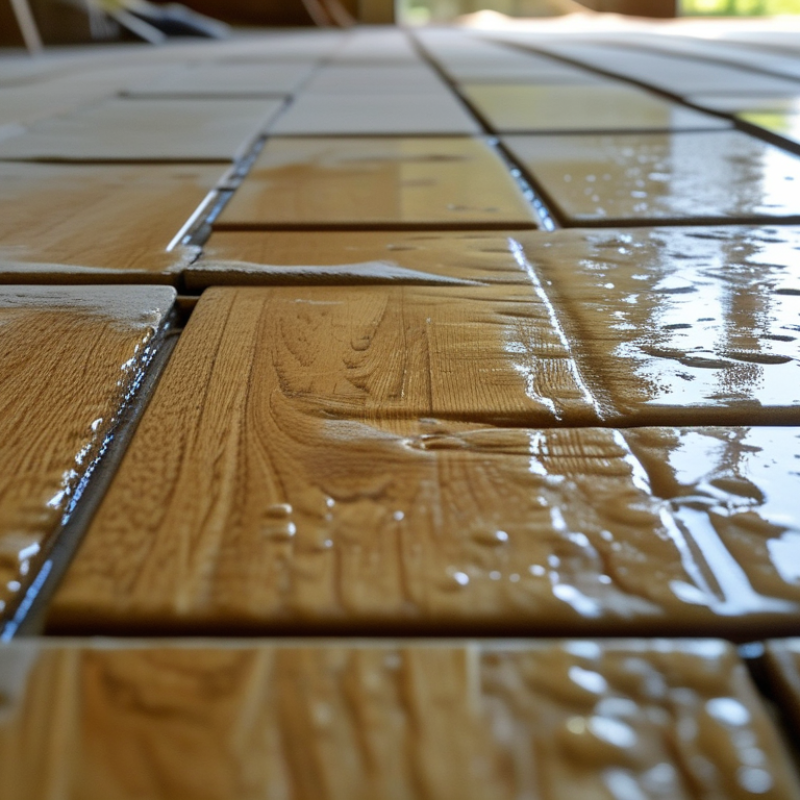
Why Is My WPC Flooring Expanding and Warping?

What WPC Flooring Is and Why It Can Expand or Warp

WPC flooring means wood plastic composite flooring. Its core blends wood fibers, polymers, and stabilizing additives. This structure gives the planks strength, moisture resistance, and a warmer feel underfoot. However, WPC is not completely immune to movement.

Temperature changes can make the core expand or contract. Strong sunlight through a large window may heat one section unevenly. Moisture can also enter through unsealed edges, wet subfloors, or poorly fitted transitions. When planks lack enough expansion space around walls, they press against each other and begin to rise. That raised edge is often called peaking or tenting.

Installation conditions matter greatly. The subfloor should be dry, clean, and reasonably level before laying the planks. Experienced installers usually leave a controlled perimeter gap and allow the flooring to acclimate indoors. Heavy cabinets can create another problem by trapping one area while the rest moves naturally. Not every warped plank results from poor material quality. Sometimes the room conditions were overlooked. That is worth checking honestly.

WPC can also warp after repeated dampness, especially when water remains near joints. A soft, uneven subfloor may transfer stress into the locking system. Inspect the room temperature, moisture sources, expansion gaps, and plank direction before replacing boards. Small details often explain large distortions.

The Main Causes of WPC Flooring Expansion and Warping

Why Is My WPC Flooring Expanding and Warping?

The main causes of WPC flooring expansion and warping are moisture, heat, and installation stress. WPC flooring contains plastic and wood-based fillers, so it moves less than solid wood. It still expands when exposed to changing temperatures. Direct sunlight can heat one plank edge faster than another, creating raised joints or slight bowing. ASTM F2199 specifically evaluates dimensional change in resilient flooring after heat exposure. This confirms that heat movement is measurable, not merely an installation complaint.

Moisture is often the quieter cause. A damp concrete slab, wet mop water, or trapped humidity can affect plank stability and adhesive performance. The U.S. Environmental Protection Agency commonly recommends indoor relative humidity between 30% and 50%. Readings above that range deserve attention. Installers should also check subfloor flatness, because low spots can make locking joints flex and separate. A continuous perimeter gap, often around 6–10 mm, allows movement near walls and door frames. ASTM F710 provides recognized procedures for preparing concrete substrates before resilient flooring installation.

The easy answer is “bad material.” That answer is sometimes too convenient. Poor acclimation, tight furniture, uneven heating, or missing expansion space may create the same symptoms. Photograph the affected area, measure room humidity, and inspect the subfloor before replacing planks. A small mistake at one doorway can force pressure across an entire room.

Why Is My WPC Flooring Expanding and Warping? - The Main Causes of WPC Flooring Expansion and Warping

Cause or Risk Factor Typical Conditions Common Symptoms How It Leads to Expansion or Warping Prevention and Corrective Action
Insufficient perimeter expansion gap Planks installed tightly against walls, cabinets, door frames, or fixed objects. Peaking, tenting, buckling, or raised edges near the room perimeter. Thermal and moisture-related movement has no room to dissipate, so the floor releases stress by lifting or bowing. Follow the flooring manufacturer’s installation instructions, maintain the specified perimeter clearance, and avoid fastening the floating floor to the subfloor.
Temperature fluctuations Rapid changes between cold and warm conditions, direct sunlight, or strong heat from radiators and HVAC outlets. Open joints, visible movement, or localized curling in sunlit and heated areas. WPC materials expand when heated and contract when cooled. Uneven heating can create differential movement across the room. Keep indoor conditions reasonably stable, use window coverings where needed, and prevent concentrated heat from blowing directly onto the floor.
High humidity or water exposure Leaks, flooding, wet mopping, plumbing failures, or persistently humid rooms. Swollen edges, lifted seams, discoloration, musty odors, or distortion around wet areas. Although WPC flooring is moisture-resistant, water can enter joints, edges, the locking system, or the subfloor and cause dimensional changes or loss of support. Clean spills promptly, repair leaks, control indoor humidity, and replace severely water-damaged planks after the source of moisture is corrected.
Inadequate acclimation Flooring is installed immediately after delivery or stored in conditions very different from the installation room. Joint separation, tight joints, or movement that appears soon after installation. The planks continue adjusting to the room’s temperature and humidity after installation, increasing movement in the assembled floor. Store unopened cartons flat in the installation area and follow the product-specific acclimation requirements before installation.
Uneven or unstable subfloor Depressions, high spots, cracks, loose materials, or excessive subfloor deflection. Rocking planks, hollow sounds, flexing joints, broken locking edges, or localized gaps. The floating floor lacks continuous support, allowing planks to bend under traffic and putting stress on the locking profiles. Inspect and level the subfloor within the product’s flatness tolerance, remove loose material, and correct structural movement before installation.
Large continuous installation area Long runs or multiple connected rooms installed without transition or movement provisions. Buckling in doorways, narrow passages, or the center of a large uninterrupted floor. Movement accumulates over a greater distance, increasing compressive stress and the likelihood of lifted planks. Use transition profiles or movement breaks where required by the installation instructions, especially between separate rooms.
Heavy fixed objects on a floating floor Built-in cabinets, kitchen islands, wardrobes, or heavy fixtures installed on top of the flooring. Buckling beside the fixture, joint failure, or visible stress lines around fixed objects. The fixed weight restricts the floor’s ability to expand and contract freely, concentrating movement in nearby planks. Install fixed cabinetry before the floating floor when appropriate, or follow the flooring instructions for isolating heavy fixtures.
Incorrect installation or damaged locking system Misaligned boards, excessive force during assembly, debris in joints, or damaged click profiles. Uneven seams, recurring gaps, chipped edges, and sections that separate under normal traffic. Weak or incomplete connections cannot distribute movement evenly, making the surface more vulnerable to distortion. Inspect boards before installation, keep locking edges clean, use the recommended installation method, and replace damaged planks.
Inadequate room conditioning Unoccupied properties, seasonal buildings, or rooms without stable heating, cooling, and ventilation. Seasonal gaps, recurring expansion, or different levels of distortion in separate rooms. Repeated changes in temperature and relative humidity cause repeated expansion and contraction, increasing stress over time. Maintain stable indoor conditions, provide adequate ventilation, and monitor moisture levels in areas with known humidity risks.
Practical inspection order: Check the perimeter gap, identify moisture sources, measure subfloor flatness, inspect transitions and fixed objects, and examine the locking joints before removing or replacing planks.

How Moisture, Temperature, and Sunlight Affect WPC Flooring

Why Is My WPC Flooring Expanding and Warping?

WPC flooring has a rigid polymer composite core, but it still reacts to heat, moisture, and sunlight. The Resilient Floor Covering Institute recommends installation conditions around 65–85°F and 35–65% relative humidity. Conditions outside this range can increase movement between planks. A damp concrete subfloor creates pressure beneath the flooring. Water may also enter through unsealed edges, bathrooms, or poorly protected doorways. The core resists moisture better than wood, but the joints and backing remain vulnerable. Small gaps matter.

Sunlight creates another problem. A dark floor beside a south-facing window can become much hotter than the room air. Repeated heating and cooling may stress locking profiles, especially when expansion gaps are too narrow. ASTM F3261 addresses dimensional performance for rigid resilient flooring, reminding installers to control flatness, temperature, and product movement. These standards do not replace site inspection.

I once blamed warped planks on defective material. That diagnosis was incomplete. A moisture meter later showed elevated readings near an exterior wall. The floor looked dry, but the slab was not. Leave heavy furniture slightly movable during inspection. Check window coverings, HVAC balance, perimeter clearance, and subfloor moisture before replacing planks. Sunlight often exposes the weakest installation detail. Not the whole floor.

Why Is My WPC Flooring Expanding and Warping?

How moisture, temperature, and sunlight affect WPC flooring

The chart estimates linear movement along a 6 m WPC flooring run as temperature rises from 10°C to 50°C. It uses three representative thermal-expansion coefficients of 30, 40, and 50 μm/m·°C; actual movement depends on the product construction and installation conditions. Moisture can swell the core or subfloor, while direct sunlight can heat boards well above room temperature, increasing expansion and the risk of buckling when perimeter gaps are insufficient.

How to Identify the Source of the Flooring Problem

Why Is My WPC Flooring Expanding and Warping?

How to Identify the Source of the Flooring Problem

WPC flooring usually warps for a reason. Start by mapping the damaged area. Swelling near a sink, door, or exterior wall may indicate moisture. A raised center often points to missing expansion space. Check whether the planks touch walls, cabinets, or heavy furniture. They need room to move.

Measure indoor humidity and subfloor moisture with reliable meters. Record the readings, room temperature, and affected locations. Inspect plumbing, window seals, and concrete edges for hidden dampness. Then examine the locking joints. Broken joints can suggest forced installation or movement beneath the floor. Strong sunlight may also heat one area and create uneven expansion. A warped plank does not always reveal the original cause. I have seen installers blame moisture when the real problem was a tight doorway. That mistake can lead to unnecessary replacement.

Tips: Remove the baseboard carefully and inspect the perimeter gap. Do not push warped planks flat with heavy objects. Photograph stains, gaps, and sunlight patterns before repairs. Compare several moisture readings, not just one. If readings seem normal, check whether the subfloor is uneven. Small height differences can stress the locking system over time. Manufacturer instructions should guide acceptable gaps and installation conditions. Still, site conditions deserve attention. A manual cannot see a leaking pipe.

Step-by-Step Ways to Prevent and Repair WPC Flooring Damage

Why Is My WPC Flooring Expanding and Warping?

Step-by-Step Ways to Prevent and Repair WPC Flooring Damage

WPC flooring usually expands when moisture, heat, or tight installation removes its movement space. Check the room before repairing anything. Look for raised edges, open joints, soft spots, and water near walls or appliances. A moisture meter can reveal problems hidden beneath the surface. Do not rely only on appearance.

Remove the baseboards and inspect the perimeter gap. Most floating floors need a consistent expansion space, often around 6–10 millimeters, but follow the flooring’s installation guide. Cut away boards pressing against walls, door frames, or heavy cabinets. Then let the area dry completely. A dehumidifier helps, but forced heat may worsen warping. I once assumed a small leak was harmless. The subfloor proved otherwise.

Replace boards that remain curled, cracked, or swollen after drying. Unlock nearby planks carefully, and avoid striking the decorative surface. Check the subfloor for dips, moisture, and loose materials before reinstalling new pieces. Uneven support can create repeated stress beneath the joints. Leave proper gaps around pipes and thresholds. Use transition profiles where floor sections meet.

Prevent future damage by wiping spills quickly and using mats near exterior doors. Keep indoor humidity reasonably stable, especially during wet seasons. Never mop with standing water. Heavy furniture should not trap a floating floor tightly. This detail is often missed. Recheck the floor after several days, because delayed movement can expose an overlooked installation mistake.

FAQS

: Why does WPC flooring expand or warp?

: Heat, moisture, sunlight, and limited movement space can deform the planks. Small gaps matter. A damp concrete subfloor may create pressure underneath. Unsealed edges and wet doorways can also allow moisture inside.

What indoor conditions help prevent flooring movement?

Keep room temperatures near 65–85°F and relative humidity around 35–65%. Stable conditions reduce repeated expansion and contraction. Large seasonal changes may still affect the joints.

How can I find the source of the damage?

Map the affected area carefully. Swelling near sinks, doors, or exterior walls often suggests moisture. A raised center may indicate insufficient expansion space. Check walls, cabinets, door frames, and heavy furniture for tight contact.

Can the floor look dry while moisture remains underneath?

Yes. Concrete may hold moisture even when the surface appears dry. Use several moisture readings across the room. One reading can mislead you.

How does sunlight affect WPC flooring?

Strong sunlight can heat one section much more than the room air. A dark floor near a south-facing window may become especially hot. Repeated heating can stress locking joints and expose narrow gaps.

What should I check before replacing warped planks?

Inspect plumbing, window seals, concrete edges, and appliance areas. Measure room humidity and subfloor moisture. Check for uneven support and broken locking joints. I once blamed defective material. That assumption was incomplete.

How can I repair slightly warped WPC flooring?

Remove the baseboard carefully and inspect the perimeter gap. Cut boards pressing against walls, cabinets, or door frames. Dry the area fully before reinstalling planks. Do not flatten warped boards with heavy objects.

When should damaged planks be replaced?

Replace boards that remain curled, cracked, or swollen after drying. Unlock nearby planks gently. Avoid striking the decorative surface. Check the subfloor before installing replacements. The visible plank may not be the real problem.

How can I prevent future WPC flooring damage?

Wipe spills quickly and place mats near exterior doors. Avoid standing water during cleaning. Keep humidity reasonably stable during wet seasons. Allow heavy furniture to move slightly with the floating floor. Recheck the flooring after several days.

Conclusion

Why is my WPC flooring expanding and warping? This common problem usually occurs when moisture, temperature changes, sunlight, or poor installation conditions affect the flooring. WPC flooring combines a waterproof core with layered surface materials, but it still needs room to expand and contract. Excess moisture from leaks or damp subfloors, insufficient expansion gaps, uneven surfaces, and prolonged direct sunlight can cause boards to swell, separate, bend, or lose their original shape.

To identify the source, inspect the affected area, check for moisture beneath or around the floor, observe nearby windows and heat sources, and review the installation spacing. Minor issues may improve after reducing humidity, controlling indoor temperatures, blocking harsh sunlight, and allowing the flooring to settle. Severely damaged boards may need replacement, while the underlying moisture or subfloor problem must be corrected first. Proper acclimation, a clean and level subfloor, suitable expansion gaps, and regular maintenance are the best ways to prevent future damage.

Liam

Liam

Liam is a dedicated marketing professional with a profound expertise in the industry, where he excels at highlighting the unique advantages of our core products. With a keen understanding of market trends and consumer needs, Liam frequently updates our company’s professional blog, providing......