A quiet WPC floor should feel steady underfoot. When it squeaks, the sound often comes from small movements between the boards, underlay, and subfloor. A click-lock joint may shift slightly as your weight presses down. An uneven spot beneath the floor can create the same effect. So can tight installation gaps, loose fixings, or debris trapped under a plank. The noise may be brief, but its source is not always obvious.
What causes WPC boards to squeak when walking is usually a question of movement and friction, not simply a defective board. Listen closely near doorways and along the edges. Does the sound happen with every step, or only over one spot? That detail can help narrow the cause. A practical line for a verified installer to review is: “A squeak is often a clue that two parts of the floor are moving against each other.” — [Insert verified expert’s name], WPC flooring installation specialist. This quotation is a draft, not a verified statement from a named expert.
Even careful checks can miss something. A board may sound fine in the morning and creak after the room warms up. That is frustrating, and it deserves a closer look. The guide ahead explains what to inspect before lifting planks or attempting repairs.
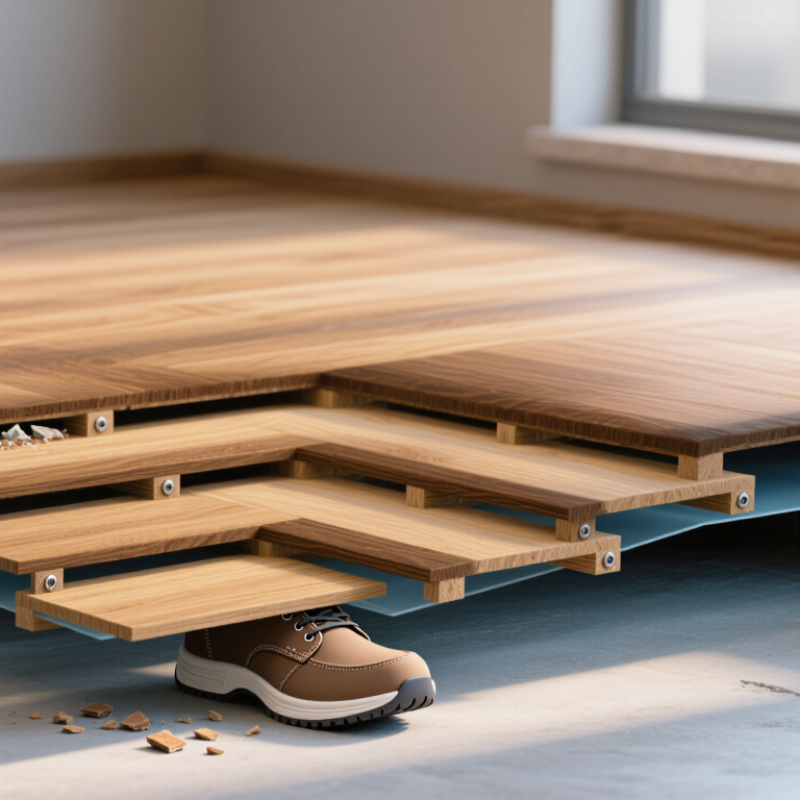
WPC boards are made from wood fibers or flour blended with thermoplastics and additives. The mix is formed into solid or hollow profiles, often with a textured outer surface. It is not simply wood with a plastic coating. The USDA Forest Products Laboratory’s 2021 Wood Handbook explains how moisture affects wood dimensions; that matters because wood fiber remains part of a WPC board, though composite products respond differently from solid lumber. Small gaps matter.
Installation usually starts with a firm, level frame and joists spaced to suit the board profile and expected loads. Installers fasten boards with approved screws or clips, leaving the manufacturer’s specified gaps at ends and edges. Those spaces allow for movement and drainage. ASTM International’s D7032 standard evaluates wood-plastic decking for properties including flexural performance, creep, and weathering. Its testing scope is a useful reminder: appearance alone does not establish structural performance.
A squeak can develop when a board rubs against a joist, clip, or neighboring board. Loose fasteners, uneven supports, and debris trapped beneath the decking can all create friction as someone walks across it. Check that the frame is flat before laying boards; even a small high spot can concentrate movement. One detail is easy to overlook: a tight-looking joint may still need clearance for seasonal expansion. Follow the product’s installation instructions, since spacing and fastening requirements vary by profile and temperature.
| Topic | What It Means | How It Can Cause Squeaking | What to Check | Practical Response |
|---|---|---|---|---|
| What WPC boards are | Wood-plastic composite boards are made from a mixture of wood-based material and thermoplastic, with additives that vary by product. | The board material itself is not usually the only source of a squeak; movement or friction in the installed assembly is often involved. | Identify whether the sound comes from the board, its fasteners, the supporting frame, or the subfloor beneath it. | Use the installation instructions for the specific board type, since product formulations and requirements differ. |
| Board movement | WPC boards can change dimension with temperature; the amount and direction of movement depend on the product and conditions. | Boards installed without the required expansion clearances may press against one another or nearby walls, creating rubbing sounds as they move. | Look for tight board joints, pinched perimeter gaps, or boards that appear bowed or compressed. | Check the product instructions for the specified end, side, and perimeter gaps; do not assume one clearance fits every product. |
| Loose or incorrect fastening | Boards are commonly secured with compatible clips or screws, depending on the system and application. | A loose fastener or a board shifting against a fastener can produce intermittent friction under foot traffic. | Check for loose clips, raised fastener heads, damaged edges, or movement at board-to-frame connections. | Repair using the approved fasteners and method. Avoid over-tightening, which can restrict movement or damage the board. |
| Uneven or flexible support | Decking and flooring boards rely on a stable supporting frame or subfloor, with support spacing appropriate to the product and expected loads. | Excessive deflection can make the board rub against supports or adjacent components, sometimes producing a squeak or creak. | Press or walk near the sound and note whether the supporting frame or floor also moves; inspect for loose or damaged supports. | Have the support structure checked and correct spacing or stability issues according to the board maker's guidance and local requirements. |
| Debris or contact points | Small particles or unintended contact between components can remain trapped during installation. | Repeated movement over a trapped particle or rubbing contact point can create a localized squeak or clicking sound. | Locate whether the noise is limited to one spot and inspect accessible joints and the area beneath the board if safe to do so. | Remove accessible debris and correct unintended contact without blocking designed drainage or movement gaps. |
| Typical installation sequence | Installation generally involves preparing a stable base or frame, positioning boards, allowing the specified clearances, and fastening them with the recommended system. | Skipping preparation, spacing, or fastening requirements can allow movement and increase the chance of noise. | Review the installation against the product instructions, including support spacing, fastener placement, and ventilation or drainage details where relevant. | Follow the current instructions for the particular product and application; consult a qualified installer if the frame or subfloor may be unsafe. |
| When to seek an inspection | A squeak may be minor, but persistent movement can indicate an installation or support issue. | Noise accompanied by noticeable flex, loose boards, or worsening gaps deserves closer attention. | Check for damaged boards, unstable supports, water-related deterioration in the structure, or a sound that spreads over time. | Arrange a professional inspection if the floor feels unstable, structural components appear damaged, or the source cannot be safely identified. |
They combine wood fibers or flour with thermoplastics and additives. Some profiles are hollow; others are solid. They are not wood with a plastic coating.
Gaps give boards room to expand and contract. They also help water drain. Small gaps matter.
A board may rub against a joist, clip, screw, or neighboring board. Loose fasteners and trapped grit can also create noise.
Yes. Uneven joists or weakly supported edges can let boards flex underfoot. Even a small high spot can cause movement.
Walk slowly and note the exact spot. Listen near board ends, screws, and high-traffic areas. Check whether the sound changes after direct sun.
No. Random or overly tight fastening can restrict board movement. Check the installation instructions before making adjustments.
Look for lifted screws, blocked drainage, debris, and joists that flex. Use a straightedge to spot uneven support. One quiet area proves little.
The rubbing point may be hidden beneath a board. Record when and where the sound occurs, then have the substructure inspected if boards dip or noise persists. I might still miss a hidden contact point.
WPC boards combine wood fibers and plastic, and they are usually fixed to a supporting frame with clips or screws. Although this installation creates a sturdy surface, small gaps, uneven supports, or loose fasteners can allow boards to shift slightly underfoot. What causes WPC boards to squeak when walking is often the friction created as a moving board rubs against a fastener, joist, spacer, or neighboring board. Repeated footsteps can make this movement more noticeable over time.
Moisture and temperature changes may cause the boards and supporting structure to expand, contract, or flex, while wear can loosen connections and increase movement. To diagnose the noise, listen for where it occurs and check whether boards feel loose, rub together, or rest unevenly on the frame. Cleaning away trapped debris, correcting gaps, securing loose fittings, and improving support can help reduce squeaking. Allowing suitable room for expansion and keeping the deck well maintained may also prevent noise from returning.

 KandS Floor