WPC (Wood Plastic Composite) boards are popular in flooring and outdoor designs. They combine the durability of plastic with the beauty of wood. However, many users encounter a frustrating issue: squeaking when walking. What causes WPC boards to squeak when walking?
Industry reports reveal that nearly 30% of WPC users experience this problem. Factors include improper installation, moisture levels, and subfloor conditions. Each element plays a significant role in the overall performance of WPC boards. For instance, moisture can expand or contract the boards, leading to friction.
Professional insights indicate that a deeper understanding of these factors can improve product selection and installation tactics. Homeowners and builders alike must reflect on their choices. Squeaks can undermine the aesthetic appeal and comfort of a space. Awareness of the root causes can lead to better solutions.
Understanding WPC Boards and Their Composition
WPC boards, or wood-plastic composites, are increasingly popular in construction and decking. Comprising a blend of wood fibers and recycled plastics, they offer durability and low maintenance compared to traditional materials. A recent industry report indicates that the WPC market in North America alone is projected to grow at a CAGR of 12% over the next five years. This growth reflects a shift towards sustainable building materials.
The composition of WPC boards can vary significantly. They typically contain about 50-70% wood fibers and 30-50% plastic. This mix influences their physical properties, including resistance to moisture and warping. However, the integration of materials can sometimes lead to issues. A common problem is the squeaking noise during movement due to insufficient lubrication between the boards. This is often overlooked in product assessments, but it impacts user experience.
The quality of wood fibers also plays a crucial role. Lower-grade fibers may lead to inconsistent density, which can exacerbate the squeaking problem. Additionally, environmental factors such as temperature and humidity can cause WPC boards to expand and contract, further contributing to unwanted sounds. It is essential for manufacturers to address these concerns to enhance the overall quality and performance of WPC products.
Common Causes of Squeaking Sounds in Flooring
Squeaking sounds in WPC (Wood Plastic Composite) flooring can be frustrating. These noises often occur due to a few common causes. One main reason is insufficient expansion gaps. When WPC boards expand or contract, they may rub against each other, leading to noise. If the installation doesn’t allow for adequate space, squeaking can happen over time.
Another cause is uneven subfloor. If the surface beneath the WPC boards is not level, the boards may not sit firmly. This can create friction and lead to squeaking as you walk. Moisture can also play a role. High humidity levels can cause the WPC boards to swell, resulting in unwanted sounds.
Lastly, poor-quality installation can contribute to issues. If the boards are not securely fastened, they may move slightly when stepped on. This movement creates noise. Taking the time to examine these factors can help address the issue directly. Observing these details will help in reducing squeaks.
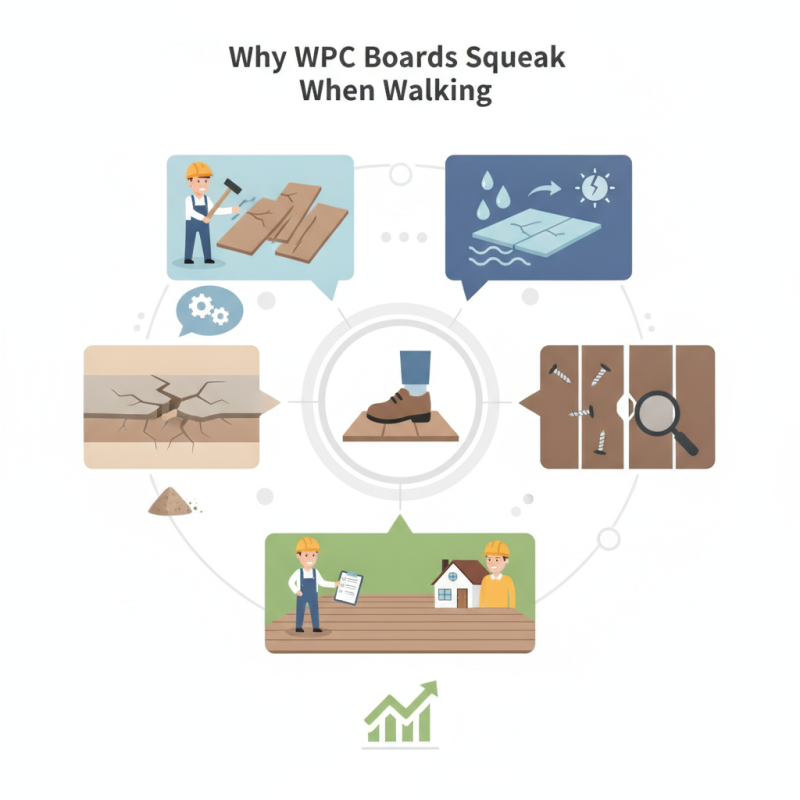
Top 5 Reasons Why WPC Boards Squeak When Walking
Impact of Environmental Factors on WPC Board Noise
Environmental factors can significantly affect the noise levels of WPC boards.
Temperature fluctuations can cause the material to expand or contract. This movement often leads to
squeaking sounds when pressure is applied, such as when walking.
High humidity can exacerbate this issue. Moisture absorption may increase, resulting in additional
movement and noise.
Proper maintenance of WPC boards can help mitigate noise issues. Regularly applying a sealant
can reduce moisture absorption. This extra layer protects the boards and decreases the chances of
squeaking. Additionally, ensure that the underlying structure is
stable. Any instability can lead to uneven pressure, causing additional noise when walking.
Tip: Use a dehumidifier in humid conditions. Keeping the area dry
can minimize the movement of the boards. Additionally, check for loose boards periodically.
Tightening any loose screws or fasteners alleviates excessive movement. This simple practice can greatly
enhance the sound quality of your flooring.
Maintenance Tips to Reduce Squeaking in WPC Flooring
WPC flooring is an excellent choice for homes. However, squeaking can occur when walking on it. To maintain its quality, regular checks are essential. Inspect for loose boards or gaps. These issues often cause annoying noises. Keeping the environment stable is key. Humidity changes can affect WPC boards, leading to expansion and contraction.
Using a soft cloth to clean the flooring helps reduce dust accumulation. Dust can settle between the boards and cause friction, leading to squeaks. Applying a lubricant can also help. Use it sparingly on hinges and joints. But be cautious; too much product can attract dirt. Regular maintenance ensures a comfortable walking experience.
Pay attention to your flooring's condition. Any signs of warping or damage need immediate attention. Sometimes, the squeaks indicate a more significant issue. Addressing these problems quickly can prolong the life of your WPC boards. Creating a consistent maintenance routine will minimize inconveniences and enhance the beauty of your home.
When to Seek Professional Help for WPC Board Issues
WPC boards, known for their durability, can sometimes produce a squeaking noise when walked on. This can be frustrating and raise questions about the underlying issues. Recognizing when to seek professional help is crucial to maintaining the integrity of your flooring.
If your WPC board squeaks, it may signal poor installation or moisture issues. Uneven surfaces can lead to friction, causing squeaks. Don’t ignore this; early intervention can prevent costly repairs. A professional can assess the integrity of your installation and offer the best course of action.
Tip: Regular maintenance is key. Check for any loose boards or shifting tiles. A simple tightening can alleviate many noise issues.
In some cases, squeaking can be indicative of more severe structural problems. If you notice an increase in noise, or if the squeak is accompanied by movement in the boards, consider getting an expert involved. Their knowledge can help you avoid further damage.
Tip: Document the squeaking. Note when it occurs and under what conditions. This information can be valuable for a technician.
Don’t remain puzzled by noise underfoot. Waiting too long can lead to bigger challenges. Getting help can save you time and money in the long run.
FAQS
: Squeaking often results from loose boards or gaps, leading to friction when walking.
Humidity changes can lead to expansion and contraction of WPC boards, causing squeaks.
Use a soft cloth to clean regularly; this helps minimize dust accumulation between the boards.
Yes, applying lubrication on hinges and joints can help, but use it sparingly.
Seek help if squeaks are frequent or if they come with movement in the boards.
An increasing squeak can indicate serious structural issues that require immediate attention.
Regular maintenance is vital; it helps avoid inconveniences and preserves your flooring’s beauty.
Simple tightening of loose boards can alleviate many noise issues but monitor the situation.
Any signs of warping need immediate attention to prevent additional damage to the boards.
Note when and under what conditions the squeaks occur; this information can be very helpful.
Conclusion
WPC boards, or Wood Plastic Composite boards, have gained popularity for their durability and aesthetic appeal. However, one common issue that homeowners encounter is the squeaking sound when walking on these floors. Understanding what causes WPC boards to squeak when walking is crucial for maintaining a quiet and comfortable living environment. Common culprits include misalignment during installation, lack of adequate support, and worn-out materials. Additionally, environmental factors such as humidity fluctuations can exacerbate these noises.
To mitigate squeaking, regular maintenance is essential, including checking for loose boards and ensuring proper humidity levels in the home. When basic maintenance fails to resolve the issue, it may be wise to seek professional help to assess and address underlying problems effectively. Proper understanding and proactive measures can significantly reduce the likelihood of squeaking in WPC flooring, enhancing the overall experience of this popular flooring choice.

 KandS Floor